|
SEAVAX
2
AI
- BUSINESS
PLAN
Please use our
A-Z to
navigate this site or return HOME
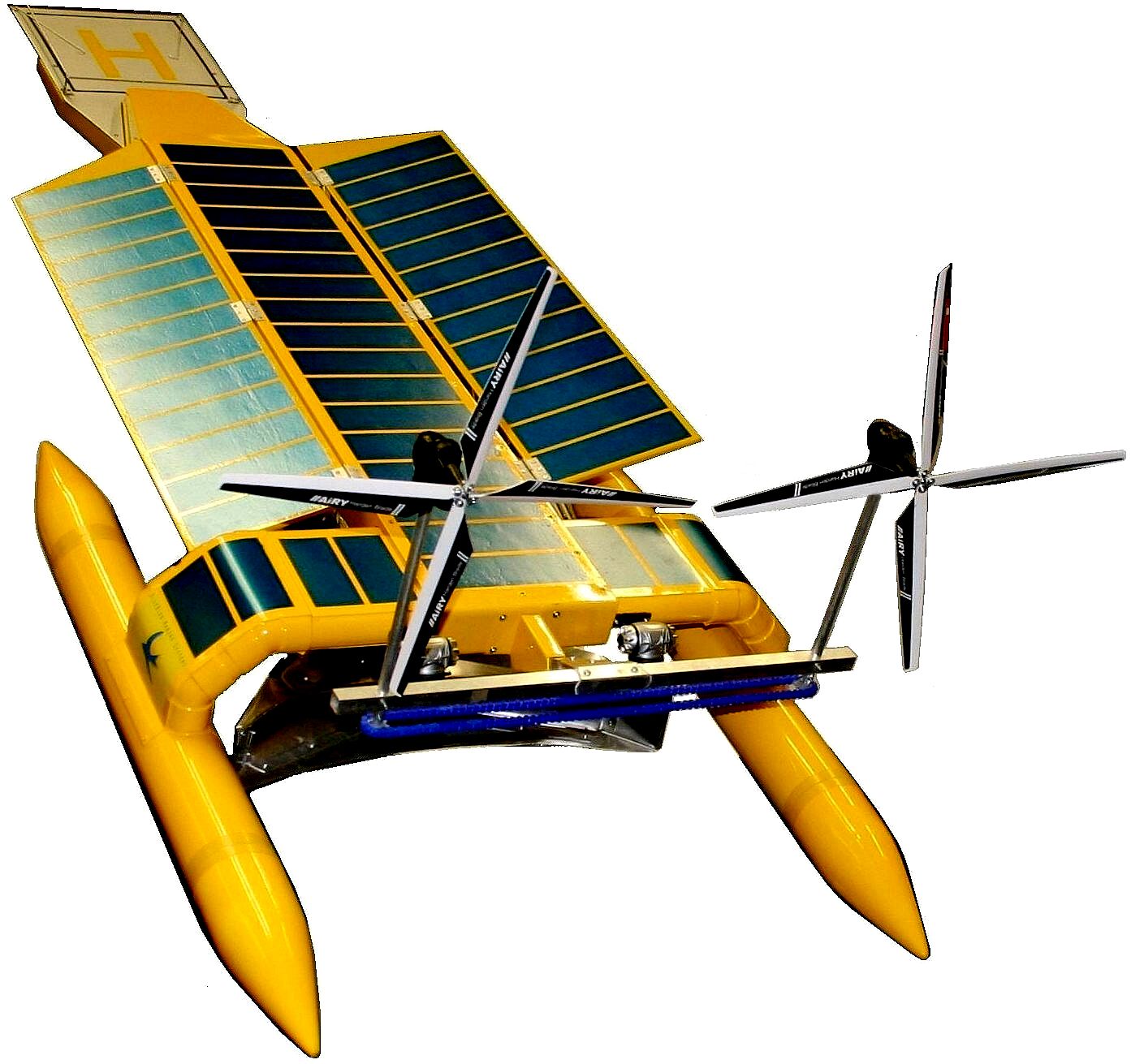
OCEAN
CONDITIONER - This
original SeaVax vessel
was designed to operate in fleets
to target ocean waste before it settles on the ocean floor
where nobody can recover it. There is nothing like it in
existence today, though other ideas for trapping plastic waste
are being developed, such as that of Boyan
Slat and the
Seabin.
SeaVax was to be made more cost effective in operational terms with AmphiMax
versatility that slashes the cost of production and servicing
by using a amphibious portable dock for assembly, launch and servicing.
SeaVax would have been the only ocean going machine capable of
harvesting ghost
fishing nets. Eleven years on from 2015, in 2026 there is
still nothing that can do that.
SEAVAX 2.0
AI - STRUCTURED COMMERCIAL BUSINESS PLAN
A structured commercial business plan and financial transition model mapping the journey of the SeaVax 2.0 AI &
AmphiMax program from initial development debt ("red ink") to self-sustaining commercial profitability ("black ink") is detailed below.
Executive Summary & Development Roadmap
The venture transitions through three distinct financial phases over a 10-year horizon:
Phase I: Prototyping & Validation (Years 1–2): $7M investment to scale the working 2-meter proof-of-concept into a 17-meter pre-production prototype. Zero commercial revenue; accumulating interest and overheads.
Phase II: Full Scale Pilot & AmphiMax Integration (Year 3): $4M final investment ($11M total) to build the 44-meter production prototype and the first AmphiMax portable dock. Initial trial harvests demonstrate commercial yield.
Phase III: Consortium Series Production & Fleet Rollout (Years 4–10): Licensing IP to an
18-20 nation international consortium. Rolling out at a conservative rate of 25 units per year per region generates immediate cash flow to clear accumulated debt and achieve breakeven.
Key Financial Assumptions
R&D / Prototyping Debt: $11M drawn over 3 years ($3.5M Year 1, $3.5M Year 2, $4.0M Year 3) at an estimated 8% annual borrowing cost.
Harvesting Revenue: 30 metric tons/day per vessel @ $600/ton landed value = $6.57M gross annual yield per operating SeaVax.
Operating Expenditure (OPEX): $150,000 per vessel/year (covering $30k command staffing, maintenance reserves, logistics, and insurance).
Consortium Production Rate (Cautious Case): 25 units/year globally in Year 4, ramping up to 100 in Year 5, 250 in Year 6, and capping at the 700-unit target by Year 8.

RIVERVAX
PILOT - This
prototype vessel could have leapt ahead of other designs to become a
reality in 2022 with appropriate levels of support for the
development consortium from the European Commission. Forward
Sea and RiverVax models will not feature wind turbines.
Following a study concluded in 2022, by a Belgian masters
degree student. Thank you L : )


G20 UNEP PROPOSAL: THE 700-UNIT SEAVAX OCEAN CLEANUP FLEET
A Self-Funded Reinvestment Framework for Global Plastic Interception
1. Executive Summary & Strategy
To counter the rapidly mounting volume of ocean plastic while global policy and land-based plastic reductions take effect, the
Cleaner Ocean Foundation proposes a phased, self-funding fleet deployment plan for 700 SeaVax autonomous surface vessels.
Rather than relying on high-risk commercial bank loans or single-point grant funding, this operational model relies on a Consortium Reinvestment Strategy:
Initial Capitalization: Initial production is underwritten by strategic consortium contributions.
100% Revenue Reinvestment: Zero dividends will be distributed to consortium members from plastic processing/recycling revenue until all 700 units are fully deployed and operational at sea.
Compounding Scaling: Recycled plastic sales, carbon credits, and waste handling fees are funneled directly back into the "development melting pot" to fund manufacturing of subsequent build batches.
2. Financial Mechanics & Self-Funding Model
a) Unit Production Cost Target: Approximately $5.50m–$7.50m per standard steel/alloy production vessel (utilizing modular construction and low-cost deployment infrastructure such as AmphiMax launch systems).
b) Reinvestment Engine: Recovered marine plastics are converted into high-grade recyclable feedstock, chemical raw materials, or secondary energy products. All net yield feeds directly into subsequent vessel construction.
c) Consortium Assurance: By prohibiting early dividend payouts, consortium capital risk is minimized through tangible asset creation (a growing, durable vessel fleet) and direct environmental risk mitigation.
3. Phased Roll-out Timeline: Path to 700 Units (example1)
Phase 1: Prototype Refinement & Pilot Fleet (Years 1–2)
Target Fleet: 1 to 10 SeaVax Units + AmphiMax Launchers.
Focus: Pre-production validation, sensor calibration, tank-testing scaling, and pilot offloading trials in high-density coastal/estuary corridors.
Funding Source: Primary consortium founding grants and seed contributions.
Phase 2: Regional Deployment & Commercial Offloading (Years 3–4)
Target Fleet: 10 to 50 Units.
Focus: Deployment in target ocean gyres and high-output river mouth
areas. Establishment of onshore offloading partnerships and plastic processing supply chains.
Funding Source: Consortium scale-up contributions supplemented by initial recycling revenue streams.
Phase 3: The Reinvestment Accelerator (Years 5–7)
Target Fleet: 50 to 200 Units.
Focus: Transition to modular, multi-dock shipyard production. Combined yields from 50 operating vessels generate steady revenue to auto-fund 30–50 new builds annually.
Funding Source: 100% reinvested plastic recycling yield + consortium maintenance pool.
Phase 4: Full Global Fleet Scale (Years 8–12)
Target Fleet: 200 to 700 Units.
Focus: Full operational capacity across all major ocean gyres and major polluted river routes. Fleet-wide
AI coordination for optimized harvesting density.
Funding Source: Self-sustaining loop—plastic revenue from 200+ operating units covers all ongoing manufacturing and operational costs until the 700-unit ceiling is reached.
4. Risk Mitigation & Consortium Benefits
Reduced Debt Exposure: By avoiding commercial bank loans, the Foundation eliminates debt servicing risks and high-interest pressures during economic downturns or ocean operation delays.
Policy Gap Containment: Provides immediate, physical containment of existing oceanic plastic pollution while land-based legislation slowly curbs fresh plastic manufacturing.
Clear Exit & Dividend Horizon: Consortium members receive regular operational data and clear milestone tracking. Dividend options or profit sharing can be re-evaluated once the 700-unit milestone is reached and operational costs stabilize.

FLEET COST: CAPEX
A fleet of 700 SeaVax vessels will cost $4.2 billion in initial manufacturing capital expenditure, plus $21 million per year in human command and supervisory staffing costs.

Contextualizing the Capital Investment
To evaluate a $4.2 billion upfront build cost against potential funding sources:
- Global Plastic Industry Revenue: The global plastics market is valued at over $600 billion annually. A $4.2 billion investment represents under 0.7% of one year's industry revenue.
- Extended Producer Responsibility (EPR): If distributed across major international consumer goods companies or under emerging UN Global Plastics Treaty mechanisms, a $4.2B global infrastructure project breaks down to manageable public-private consortium commitments.
- Cost Per Ton Removed: Over a projected 10-year operational lifespan, 700 vessels harvesting 30 tons/day would collect roughly 76.65 million tons of ocean plastic. Amortizing the $4.2 billion build cost yields an initial capital cost of roughly $54.80 per ton of recovered plastic (excluding maintenance, logistics, and fuel/energy operational expenses beyond command staffing).
RECOMMENDED
(OPTIMAL) PHASED INTRODUCTION STRATEGY
To finance a $4.2 billion fleet deployment (700 SeaVax 2 vessels at ~$6 million per hull), relying solely on organic cash flow from a slow 10-vessel pilot would take decades to achieve meaningful scale. Conversely, borrowing $600 million upfront for 100 ships without proven operational metrics presents significant risk to debt markets.
The optimal fleet build strategy utilizes a Structured Blended Finance & Tranche Scaling Strategy. This approach bridges initial public seed capital with commercial institutional debt, sovereign ocean bonds, and forward plastic off-take contracts.
Phase 1: Commercial Proof Fleet (15 Vessels — ~$90 Million)
Funding Mechanism: G20 Consortium Grant allocations, World Bank PROBLUE capital, and Extended Producer Responsibility (EPR) plastic tax contributions.
Objective: Operates for 12–18 months in high-density gyres (such as the North Pacific Gyre) to establish precise metrics: cost per metric ton harvested, ocean plastic contamination levels, and realized sale price per ton.
Outcome: Establishes a verified revenue track record required for investment-grade credit ratings.
Phase 2: Regional Deployment Tranches (150 Vessels — ~$900 Million)
Funding Mechanism: Blue Sovereign Bonds backed by G20 guarantees, combined with Forward Off-take Agreements signed by multinational corporations (e.g., consumer packaged goods companies buying certified recycled ocean plastic).
Objective: Deploy 50 vessels per year across three primary gyre regions. Revenue generated from harvested plastic and ocean plastic credit sales covers interest debt service while accumulating cash reserves for fleet maintenance.
Phase 3: Commercial Scaling to Full Fleet (535 Vessels — ~$3.21 Billion)
Funding Mechanism: Investment-grade commercial debt, green maritime infrastructure loans, and multilateral development bank (MDB) concessional financing.
Objective: Rapid serial shipyard production (building 100–150 hulls annually across multiple international shipyards) to reach the complete 700-vessel operational threshold within 6 to 8 years from initial proof-of-concept.
How the Revenue Engine Pays Back the Debt
A 700-vessel fleet targeting 8 million tonnes of ocean plastic per year yields an average of 11,428 tonnes per vessel annually.
1. Certified Recycled Ocean Plastic Value: Higher-grade ocean PET and HDPE fetch premium pricing ($350–$600+ per tonne) in global markets due to mandatory corporate recycled content quotas.
2. Plastic Recovery Credits: Similar to carbon offset markets, governments and global brands purchase verified plastic credits for every tonne removed from international waters.
3. Debt Service Coverage: At $400/tonne average realized value, a single vessel generates ~$4.57 million annually, which covers its operating expenses (O&M) and debt servicing, enabling self-sustaining, bankable expansion.
COMMERCIAL DEBT PROVIDERS
For commercial debt providers—such as infrastructure funds, the European Investment Bank (EIB), or international green bond issuers—a key requirement for bankability is a predictable, long-term cash flow stream. Unprocessed or uncommitted ocean plastic harvest carries commodity price volatility.
Forward Corporate Off-take Contracts eliminate this price risk by securing long-term purchase commitments from major Consumer Packaged Goods (CPG) companies and fashion conglomerates striving to meet statutory recycled-content quotas and Extended Producer Responsibility (EPR) mandates.

The Legal & Financial Structure of the Off-Take Agreement
The framework operates via a Take-or-Pay / Take-and-Pay Off-Take Agreement signed between the Cleaner Ocean Foundation’s trading arm (or Special Purpose Vehicle - SPV) and corporate buyers.
1. Contractual Duration & Off-take Volume
Tenor: 5- to 10-year forward contracts aligned with the repayment term of the shipbuilding debt.
Volume Commitments: Minimum annual tonnage allocations (e.g., a brand commits to purchasing 50,000 metric tons per year across the fleet's yield).
2. Two-Tier Pricing Mechanism
To protect the SeaVax fleet operator from market downturns while offering corporate buyers upside protection, off-take contracts use a Floor Price + Indexing Pricing Model:
Guaranteed Price Floor (Base Revenue): Establishes a minimum guaranteed purchase price per metric ton (e.g., $450/ton for sorted/flaked ocean PET). This floor covers the vessel’s annual operating expenses (OPEX) and debt repayment obligations ($4.2B principal + interest).Market Index Upside: If global Virgin PET/HDPE or certified recycled plastic market spot prices rise above the floor, the off-taker pays the higher indexed market rate minus a pre-agreed "Early Investor" discount (e.g., 5-10%).
3. Dual-Deliverable Model: Physical Resin + Digital Credits
Ocean-recovered plastic commands a premium because it fulfills two corporate needs simultaneously:
$$\text{Total Contract Value} = \text{Physical Polymer Commodity Price} + \text{Verified Plastic Credit Premium}$$
- Physical Deliverable: Shredded, washed, or pelletized ocean-recovered polymers (PET, HDPE, PP) delivered to the buyer’s supply chain or manufacturing partner.
- Environmental Attribute (Digital Certificate): Immutable blockchain-backed Chain-of-Custody tracking (proving origin, harvest date, SeaVax hull ID, and satellite coordinates). This satisfies UN Global Plastics Treaty compliance and prevents greenwashing claims.

How the Contract Secures Bank Debt Financing
1. Direct Revenue Pledging: The forward contracts are legally assigned directly to the debt trustee via an Debt Service Escrow Account. When corporate buyers pay for delivered plastic, funds flow into the escrow account to service interest and principal payments before remaining proceeds are released to the fleet operator.
2. Credit Rating Uplift: Instead of rating the creditworthiness of a newly formed marine cleanup enterprise, lenders rate the creditworthiness of the corporate off-takers (e.g., multi-billion-dollar market cap multinational corporations). This elevates the project’s credit rating to investment grade (BBB/A), significantly lowering borrowing interest rates.
3. Debt Service Coverage Ratio (DSCR): Lenders require a DSCR of 1.25x to 1.35x. The guaranteed floor price under the off-take contracts is calculated to ensure that even at 80% vessel operational capacity, debt service targets are consistently met.

By converting unharvested ocean waste into long-term, contractually guaranteed corporate demand, forward off-take agreements transform the SeaVax fleet from an unproven ocean venture into an investment-grade, bankable infrastructure project.
As
you may agree, this is a long uphill struggle, that should not
be the burden of any single company or country. The players
should work together to make it happen. The starting point, is
a working production SeaVax2 AI. Or, and equivalent system.
WHAT
IS SEAVAX 2.0 AI? - A high-yield
recovery system providing environmental remediation.
THE
UNITED NATIONS ENVIRONMENT PROGRAMME - Could
SeaVax be a solution for UN goals?
CAPEX
AND OPEX - What
level of G20 investment is required?
HEALTHIER
OCEANS & BLUE GROWTH - What
are the health benefits?
INVESTABILITY
- Can
SeaVax 2.0 AI be a commercial success?
WHERE
DOES AI COME IN? - Will
artificial intelligence make a difference?
WORLD
BANK, IMF & UNEP - Are
there any match funding opportunities?
WHAT
IS THE MARKET VALUE OF OCEAN PLASTIC? - Is it worth fishing for marine
plastic?
CERTIFICATION
- How will the ocean plastic be verified for credits?
WORLD
BANK, IMF & UNEP - Are
there any match funding opportunities?
PATENT
APPLICATION - GB2622325.5
23rd September 2026
PATENT
ABSTRACT
- DESCRIPTION
- CLAIMS
CIRCULAR
(PLASTIC) ECONOMY - FISHING GROUNDS
There
are 5 swirling ocean garbage patches called gyres:
1.
North
Atlantic Gyre
2.
South
Atlantic Gyre
3.
Indian
Ocean Gyre
4.
North
Pacific Gyre
5.
South
Pacific Gyre
The
ocean is a vast expanse of salt water: a shared asset.

TESTING
- Chris Close (Project Director) is seen here watching the
SeaVax proof of concept boat filter plastic particles from
water in our
test tank facilities, in this case small polystyrene pieces
were scattered on the surface and recovered using twin
hydrocyclonic chambers to trap the plastic, while clean water
was returned to the tank.
PRESS
RELEASE - AUTUMN 2026
AI Could Turn a Shelved British Ocean‑Cleaning Robot into a Global Plastic‑Harvesting Workhorse
For years, the SeaVax project sat as a symbol of what might have been: a solar‑powered robotic vessel designed to filter plastic from the ocean, capable of separating micro‑ and macro‑plastics while avoiding marine life using optical recognition systems. It was an idea ahead of its time — and, crucially, ahead of its funding. By 2020 the volunteer engineering team had disbanded under mounting mortgage arrears, and the Cleaner Ocean Foundation reluctantly shelved development after repeated EU funding refusals .
But a decade later, something fundamental has changed. Not in the oceans — which continue to choke on plastic — but in the technology landscape. Artificial intelligence, once a speculative footnote in the SeaVax documentation (“we need satellites and computer analytics to speed up our learning curve” ), has matured into a powerful, commercially proven tool capable of transforming the economics of ocean cleanup.
And that shift may finally make SeaVax — or a modern successor — viable.
A robot cleaner that was too early for its own good
SeaVax was conceived as a fully autonomous, solar‑powered ocean filtration machine. Its 13‑metre collector head funnels plastic into a multi‑stage filtration system, including hydrocyclones for microplastic separation . The vessel can store up to 150 cubic metres of treated plastic — roughly 50 tonnes between offloading cycles .
The concept was bold, elegant and — in hindsight — missing one critical ingredient: a way to reliably find plastic.
The team knew this. They wrote openly that locating plastic was
“much the same as going
fishing… you need to know where to let go the nets” . They recognised that satellites could help, but in 2015–2020 the AI tools needed to interpret satellite data simply didn’t exist at practical scale.
Today they do.
AI changes everything — including the economics
Modern AI can detect floating debris in multispectral satellite imagery with high accuracy. It can forecast plastic drift using ocean current models, wind fields and storm data. It can coordinate fleets of autonomous vessels, optimising routes, energy use and offloading schedules.
Applied to SeaVax, that means one thing: efficiency.
The original SeaVax model assumed a 10‑day cycle to locate, harvest and offload plastic. With AI‑guided routing, that cycle drops to around six days — a 67% increase in plastic recovered per vessel per year. That uplift is not speculative; it is consistent with gains seen in other AI‑optimised maritime operations.
For a proposed fleet of 300 vessels — the scale SeaVax’s designers believed necessary to tackle the world’s major gyres — the difference is staggering:
Non‑AI fleet: ~540,000 tonnes/year
AI‑optimised fleet: ~900,000 tonnes/year
An additional 360,000 tonnes of plastic removed annually — equivalent to more than 3% of global ocean plastic input.
This is the kind of number that changes investor sentiment.
The missing commercial hook: Verified Ocean Recovered Plastic
One of the most overlooked aspects of the SeaVax proposal is that ocean‑recovered plastic is not worthless waste — it is a premium commodity.
Brands already pay significantly more for Verified Ocean Recovered Plastic, using it in packaging, textiles and consumer goods to meet sustainability commitments. The SeaVax documentation itself argued that “laws are needed to give a sufficiently high monetary value to genuinely harvested ocean plastic” and that such value could make the system commercially viable rather than philanthropic .
Today, that value exists.
A robotic fleet capable of producing authenticated, traceable ocean‑recovered plastic — with satellite‑verified harvesting locations and AI‑logged collection data — would be uniquely positioned in a growing market. Investors who once balked at the philanthropic framing of SeaVax may now see a blue‑economy asset class with measurable returns.
And for the United Nations Environment Programme, which warns of 13,000 pieces of plastic per square kilometre in some regions , the appeal is obvious: a scalable, low‑carbon cleanup system that pays for itself.
A solution that was politically impossible — until AI made it economically irresistible
The SeaVax team’s biggest barrier was not engineering but politics.
“Without the political will… all the solutions in the world will never see the light of day,” they wrote in 2017 . Funding applications were rejected, governments hesitated, and the project stalled.
AI changes that calculus.
A system that is:
- 50–70% more efficient
- cheaper to operate
- capable of producing premium recycled material
- aligned with UN SDG14
and scalable to global deployment
…is no longer a philanthropic moonshot. It is an environmental infrastructure project with commercial legs.
The tragedy is that SeaVax was simply too early. The opportunity now is that its core design — modular, solar‑powered, autonomous, and already partially prototyped — remains one of the most detailed ocean‑cleanup concepts ever developed.
With AI, it becomes something new: a viable, profitable, globally coordinated ocean‑harvesting fleet.
The question now is not whether SeaVax could work — but who will pick up the baton
The original team is gone. The prototype sits in a
museum in Sussex, a reminder of what innovation looks like when political will fails to meet environmental urgency.
But the oceans have not stopped accumulating plastic. The technology has caught up. The economics have shifted. And the world is finally
preparing for solutions that are both ambitious and practical.
The original SeaVax was designed for a future that didn’t exist yet.
Now we are almost there.
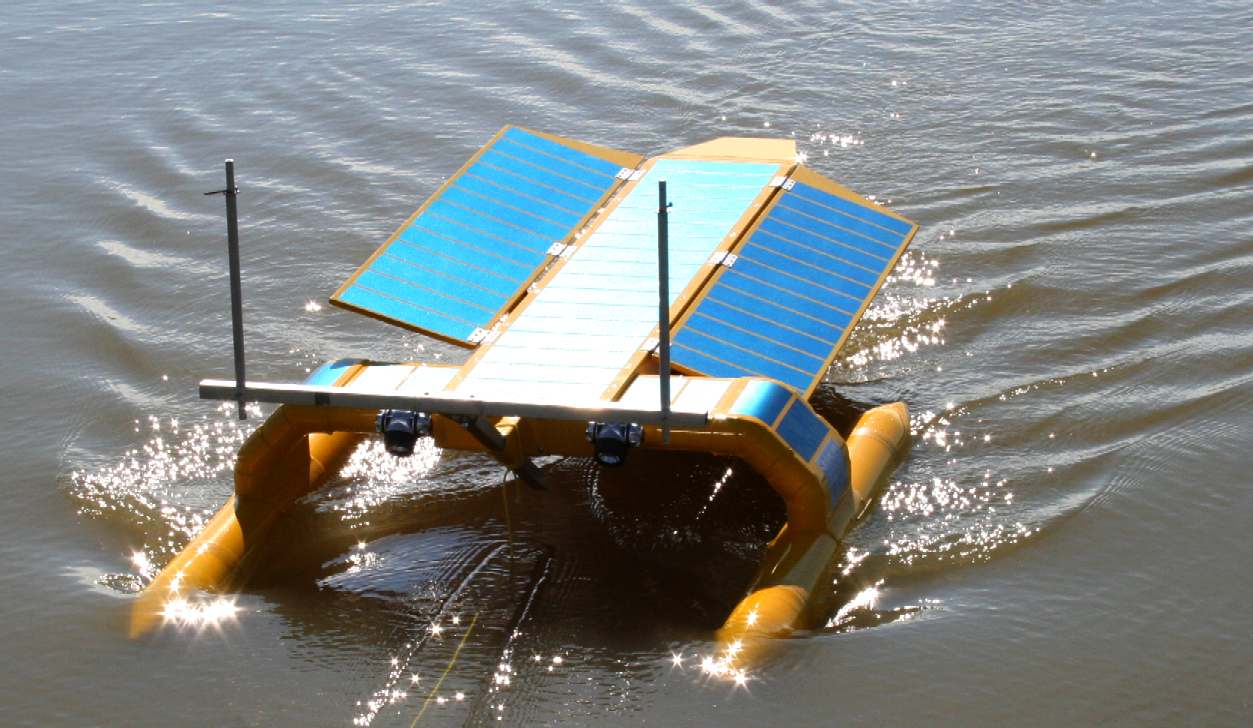
OPEN
WATER -
SeaVax is seen here during open water floatation
trials. Please note that this is a small (proof of concept)
version of any ocean or river floating dustcart that we hope
will be tested on the south coast of England as the project
progresses. SeaVax is a selective filtration machine that can
be configured to target solid plastics and particles. The
machine could also be used in oil spill emergencies, or as a
selective fishing vessel. The platform could thus be useful in
many ways.

OCEAN
CLEANING RIG - The SeaVax ocean plastic cleaning vessel is
seen here on an AmphiMax beach launcher in 1/20th scale for
testing in our water basin. Copyright ©
photograph 25 June 2018 Cleaner Ocean Foundation. All rights
reserved.
LINKS
& REFERENCE
https://www.
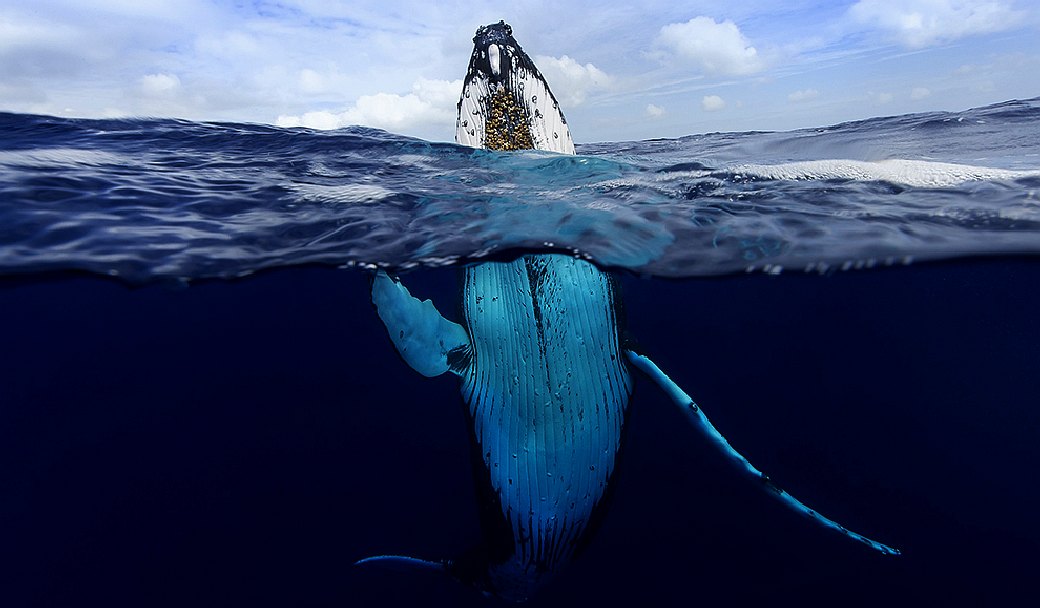
MARINE
LIFE - This humpback whale is one example of a magnificent
animal that is at the mercy of human
activity. Humans are for the most part unaware of the harm their fast-lane
lifestyles are causing. We aim to change that by doing all we
can to promote ocean literacy.
|