|
SEAVAX 2
AI -
SARGASSUM
US $DOLLAR VALUE
Please use our
A-Z to
navigate this site or return HOME
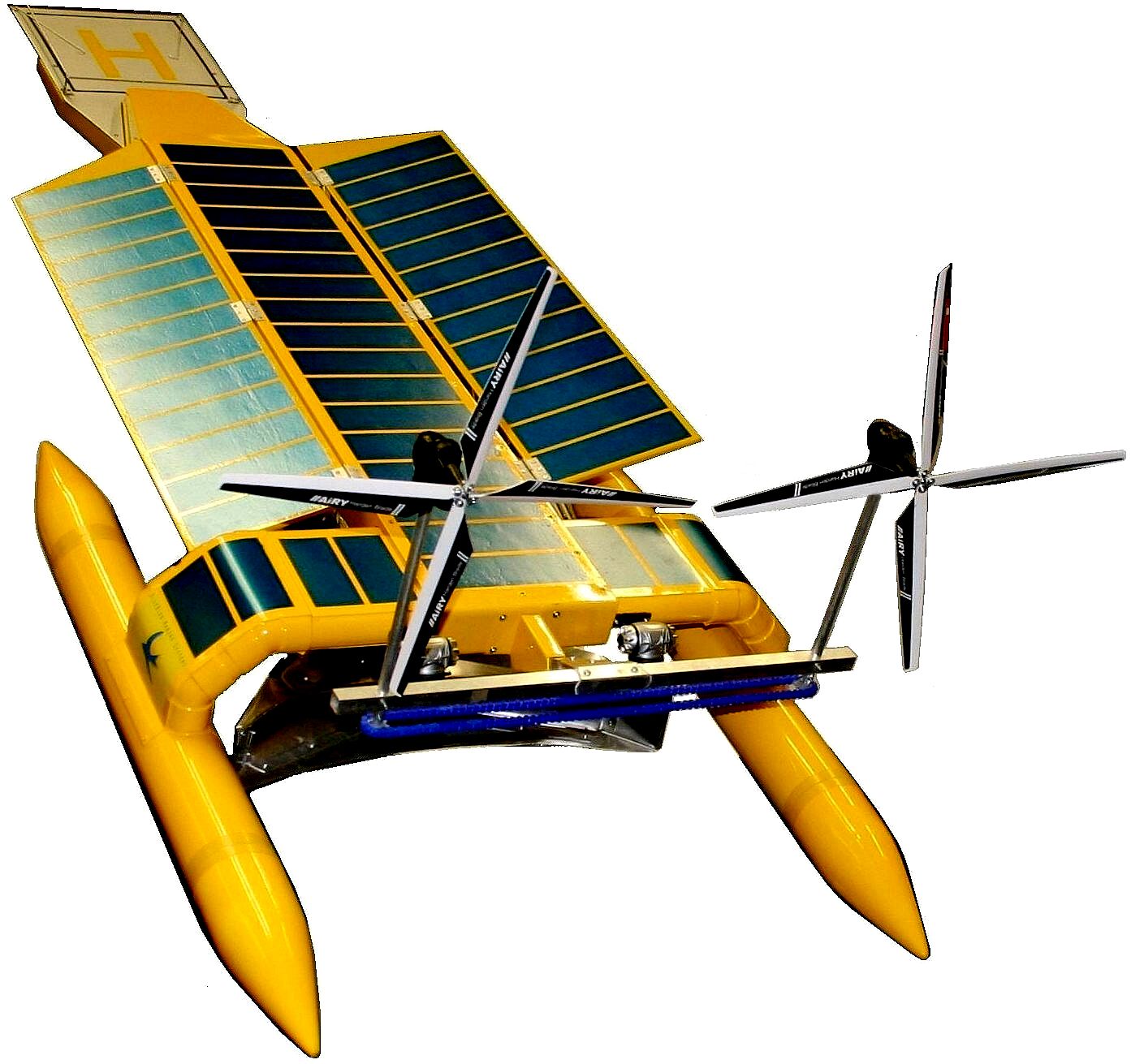
OCEAN
CONDITIONER - This
original SeaVax vessel
was designed to operate in fleets
to target ocean waste before it settles on the ocean floor
where nobody can recover it. There is nothing like it in
existence today, though other ideas for trapping plastic waste
are being developed, such as that of Boyan
Slat and the
Seabin.
SeaVax was to be made more cost effective in operational terms with AmphiMax
versatility that slashes the cost of production and servicing
by using a amphibious portable dock for assembly, launch and servicing.
SeaVax would have been the only ocean going machine capable of
harvesting ghost
fishing nets. Eleven years on from 2015, in 2026 there is
still nothing that can do that.
The current state of play across the Caribbean and the Gulf of Mexico reveals that traditional, uncoordinated response efforts are struggling to keep pace with exponential bloom growth.
Governments and municipalities are currently locked in a reactive cycle, spending massive sums on short-term fixes while watching annual volumes surge to historic highs—up to 27 times above historical averages in areas like the Mexican Caribbean.
1. How Existing Efforts Are Coping (The Ground
Reality)
Current operations rely heavily on three main methods, all of which face severe bottlenecks:
1. - Naval and Commercial Collection Barges: Several countries (notably Mexico, utilizing navy vessels) deploy surface collection boats offshore. However, these vessels are typically adapted fishing boats or small barges with limited holding capacity. They spend significant time transiting back to port to offload, burn high volumes of diesel, and struggle significantly in rough swells.
2. - Nearshore Floating Barriers (Booms): Netting and physical deflection barriers are deployed hundreds of meters off popular resort beaches to trap incoming
algae. When currents and wave action surge, these barriers frequently rupture, sending massive mats spilling over or underneath into the surf zone.
3. - Manual and Mechanical Beach Raking: Once the seaweed hits the sand, armies of workers and heavy tractors rake it up. This is slow, labor-intensive, damages fragile coastal sand dunes, causes severe beach erosion, and leaves behind rotting biomass that emits toxic hydrogen sulfide (H2S) within 48 hours of stranding.
2. The True Cost of Uncoordinated Efforts
Recent economic evaluations by the Inter-American Development Bank (IDB) and national ministries highlight the staggering financial drain of these fragmented approaches:
a) Direct Cleanup Budgets: Municipal and federal cleanup costs in the Mexican Caribbean alone run at $150 million annually just for beach and nearshore removal. Across the wider Caribbean, direct management costs scale well into hundreds of millions.
b) Macroeconomic Tourism Losses: The real economic toll dwarfs the cleanup bills. According to IDB estimates, lost tourism revenue, cancelled bookings, and degraded coastal aesthetics cost the Mexican Caribbean economy nearly
$11.5 billion a year (representing roughly 17% of Quintana Roo's regional GDP). Smaller island territories like Puerto Rico face proportional economic losses nearing $780 million annually.
c) Escalating National Investments: Recognizing that minor measures are failing, federal commitments are scaling rapidly. For instance, national programs have committed over $115 million to $150 million dedicated solely to emergency barrier and collection upgrades to stem the tide before it reaches tourist beaches.
The Strategic Takeaway
Current efforts are essentially treating the symptoms rather than the source, using manual and semi-artisanal tools against a multi-million-ton pelagic phenomenon. This underscores why autonomous, zero-emission interceptors like SeaVax 2AI are urgently needed to shift the paradigm from sandy-beach defense to offshore ecological management.
ECONOMIC
& TECHNICAL REALITIES
The economic and technical reality of extracting heavy metals—such as arsenic (As), cadmium (Cd), lead (Pb), mercury (Hg), and copper (Cu)—from harvested Sargassum presents a distinct divide between process difficulty and commercial metal value.
While these metals can be isolated, the primary financial incentive is not selling the raw metals themselves, but rather unlocking the
multi-billion-dollar value of the cleansed organic biomass for fertilizers, bioplastics, and
pharmaceuticals.
1. Technical Difficulty of Extraction
Extracting heavy metals from Sargassum cell walls requires breaking down its complex polysaccharide matrix (primarily alginates and fucoidans), which naturally act as ion-exchange resin "sponges."
[ Raw Wet Sargassum ]
│
▼ (Acid Wash / Enzymatic Hydrolysis: pH 1–3)
[ Protonation & Ion Desorption ] ──► Releases Bound Metal Ions into Liquid Leachate
│
▼ (Solid-Liquid Phase Separation)
┌───────┴──────────────────────────────┐
▼
▼
[ Cleansed Macro-Algal Pulp ] [ Concentrated Liquid Leachate ]
(Bioplastics, Alginate, Fertilizers) │
▼ (Precipitation & Solvent Extraction)
[ Hazardous Metal Sludge / Recovered Copper ]
Key Steps in the Extraction Process:
Acid Leaching / Protonation: Washing raw biomass in a mild acid bath (e.g., dilute citric, nitric, or sulfuric acid at pH 1–3) desorbs metal cations from the carboxyl and sulfate groups of the cell walls, transferring the metals into liquid solution without destroying the valuable alginates.
Selective Chemical Precipitation & Electrolysis:
Arsenic: Precipitated out using iron/calcium salts or specialized anion-exchange resins.
Copper & Lead: Recovered via electro-winning
(electrolysis) or sulfide precipitation.
Difficulty Rating: Moderate. The chemistry is well-understood and commonly used in industrial bioprocessing, but it requires chemical handling infrastructure, corrosion-resistant tanks, and closed-loop liquid waste recycling at onshore biorefineries.
2. Yield vs. Market Value: What Are the Metals Worth?
While Sargassum is a bio-accumulator, heavy metals are present in parts per million (ppm) or milligrams per kilogram of dry weight.
Typical Heavy Metal Yields per 1,000 Dry Tons of Sargassum:
(Note: 5 million wet tons yields approximately 500,000 dry tons of biomass)

Metal
Typical Concentration Recovered Yield per
Commodity Market Raw Market Value
(Dry Weight)
500,000 Dry Tons Price
of Metals
Arsenic (As) ~50 – 150 ppm
~25 – 75 tons
~$2,000 / ton
$50,000 – $150,000
Copper (Cu) ~10 – 30 ppm
~5 – 15 tons
~$9,000 / ton
$45,000 – $135,000
Lead (Pb) ~5 – 15 ppm
~2.5 – 7.5 tons
~$2,100 / ton
$5,250 – $15,750
Cadmium (Cd) ~1 – 5 ppm
~0.5 – 2.5 tons
~$3,000 / ton
$1,500 – $7,500
Mercury (Hg) < 0.5 ppm
Trace (< 250 kg)
High disposal
Negative
liability
(Disposal Cost)
Total Value ———
~$100,000 – $310,000
Conclusion on Raw Metal Value: Recovering $100,000 to $300,000 worth of raw metals from 5 million wet tons of Sargassum does not cover the chemical processing costs of extraction if done purely for metal sales.
Furthermore, toxic metals like arsenic, lead, and mercury are treated as hazardous waste requiring regulated disposal, making them a cost liability rather than an asset.
3. The True Commercial Value: Unlocking the Biomass
The economic payback of heavy metal extraction lies in qualifying the remaining biomass for high-value organic markets:
[ Raw Sargassum (Contaminated) ] ──► Worth $0 (Hazardous Waste / Beach Menace)
│
▼ (Heavy Metal Extraction Process)
[ Cleansed Biomass ] ──────────────► Worth $300 – $1,000+ per ton on Commercial Markets
High-Grade Bio-Fertilizers: Uncleaned Sargassum exceeds regulatory limit caps for inorganic arsenic in agriculture (e.g., EU and US limits). Removing heavy metals allows the biomass to be sold as premium organic fertilizer, worth $200 to $400 per ton.
Bioplastics & Alginates: Pure sodium alginate and fucoidan extracts used for bioplastics, medical dressings, and cosmetics demand $1,000 to $5,000+ per ton.
Financial Math: On 500,000 dry tons, cleansing the biomass turns a toxic waste problem into an onshore biorefining industry worth $150 million to $500+ million annually.
Unfortunately,
that is insufficient income to warrant investment in a SeaVax
fleet of sufficient capacity to yield 500,000 dry tons. Thus,
is not an attractive proposition for commercial investors.
Reframing the problem around 10 to 15 million wet tons per year fundamentally shifts the business model.
At a 50-vessel fleet harvesting 100 tons/day per vessel, the total annual physical yield is only 1.8 million wet tons ($50 \times 100 \times 360$).
To process 10–15 million wet tons, the fleet size scales to 280–415 SeaVax 2AI (SV2AISG) units.
At this scale, treating harvested algae as low-margin raw biomass results in a commercial break-even. To build an unassailable venture capital or infrastructure funding proposal, the revenue model must move beyond raw biomass sales to include multi-tier high-value refining, coastal protection retainers, and environmental credit stacking.
Below is a commercial proposal framework tailored for sovereign wealth funds, ESG infrastructure investors, and corporate off-takers.
Commercial Proposal: Project MacroShield & BioRefine
Target Capacity: 12.5 Million Wet Tons / Year (Mid-point of 10–15M Ton Target)
Core Asset: Autonomous SeaVax 2AI Sargassum (SV2AISG) Fleet & Distributed
Biorefineries
1. Capital Expenditure (CAPEX) & Fleet Requirements
Harvesting 12.5 million wet tons annually over a 350-day operational schedule requires an active fleet of 360 SV2AISG units.

Daily Capacity Required = 12,500,000/350 days = 35,714 tons/day
Fleet Size = 35,714 tons/day/100 tons/vessel/day = 360 SV2AISG Units
CAPEX Structure
Fleet Asset Costs (360 Units @ $6M/unit): $2.16 Billion
Onshore Biorefining Infrastructure (4 Regional Plants): $840 Million
Total Initial Capital Expenditure: $3.00 Billion
2. Multi-Tier Revenue Architecture (Annual Stream)
Raw Sargassum (wet) yields approximately 10% dry matter (12.5M wet tons = 1.25M dry tons). Biorefining separates this dry mass into tiered commercial products, supplemented by service fees and environmental credits.
┌──► 1. Alginates & Bioplastic Resins (15% yield) ──► $750M
├──► 2. Bio-Stimulants & Organic Fertilizers ───────► $500M
[ 12.5M Wet Tons ├──► 3. Municipal/Resort Beach Protection Fees ─────► $300M
Biorefined ] ├──► 4. Blue Carbon & Plastic Methane Offsets ───────► $250M
└──► 5. Purified Pharma Hydrocolloids (Fucoidan) ────► $200M
───────
TOTAL ANNUAL REVENUE: $2.00 Billion
Breakdown of Revenue Channels

3. Operational Expenditure (OPEX) & Financial Yield
Because the fleet is zero-emission and fully autonomous, operational expenses are primarily driven by onshore refining logistics, periodic vessel maintenance, and chemical processing inputs rather than fuel and crew costs.
- Fleet Maintenance & Remote Logistics: $180 Million / year ($500k per vessel)
- Biorefinery Processing & Chemical Washing: $320 Million / year ($25.60 per wet ton)
- Insurance, Administration & Licensing: $100 Million / year
- Total Annual OPEX: $600 Million
4. Financial Summary & Return on Investment (ROI)
Annual Net Profit: earnings before interest, taxes, depreciation, and amortization
(EBITDA) = $2,000M Revenue - $600M OPEX = $1.40 Billion / Year
Key Strategic Pillars to Present to Investors
1. Decoupling from Raw Commodity Prices: The proposal does not rely solely on selling raw fertilizer. By extracting high-value fucoidan and bioplastic-grade alginates, the gross value per ton increases by 400%.
2. De-risked Off-take Agreements: Pre-selling bioplastic resins to FMCG packaging companies looking to comply with the
Global Plastics Treaty creates a guaranteed floor price for harvested output.
3. Dual Revenue Safeguard (Municipal Protection Fees): Resort regions and regional governments pay retainers to ensure zero beach strandings, ensuring predictable operational cash flows regardless of fluctuations in bioplastic market rates.
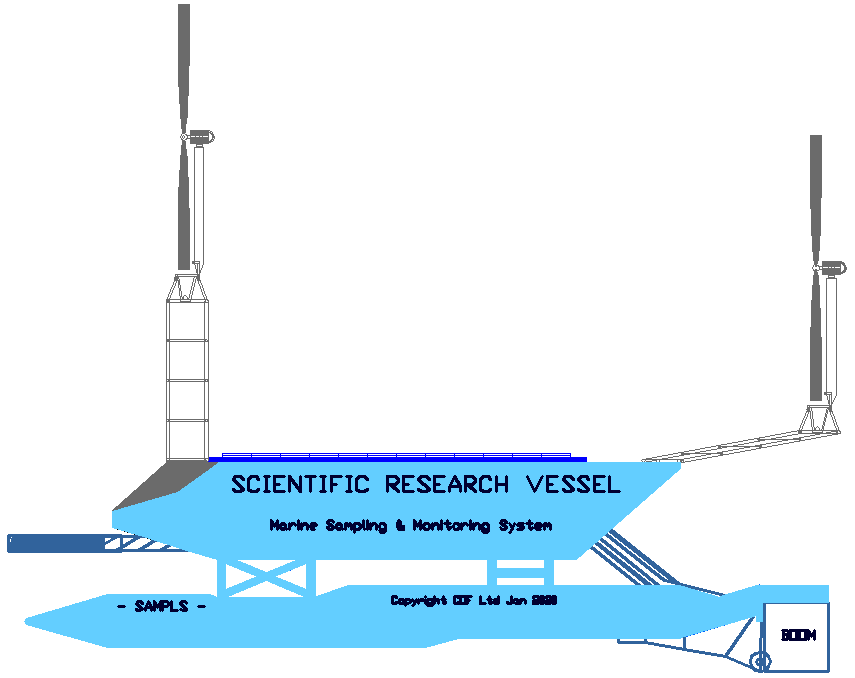
RIVERVAX
PILOT - This
prototype vessel could have leapt ahead of other designs to become a
reality in 2022 with appropriate levels of support for the
development consortium from the European Commission. Forward
Sea and RiverVax models will not feature wind turbines.
Following a study concluded in 2022, by a Belgian masters
degree student. Thank you L : )
WHAT
IS SEAVAX 2.0 AI? - A high-yield
recovery system providing environmental remediation.
THE
UNITED NATIONS ENVIRONMENT PROGRAMME - Could
SeaVax be a part solution for UN goals?
CAPEX
AND OPEX - What
level of G20 investment is required?
CERTIFICATION
- How will the ocean plastic be verified for credits?
GHOST
FISHING GEAR - Drowning
fish, mammals and reptiles, and animal poisoning
HEALTHIER
OCEANS & BLUE GROWTH - What
are the health benefits?
INVESTABILITY
- Can
SeaVax 2.0 AI be a commercial success?
OIL
SPILLS - Can crude from major ocean spills, become
a recoverable resource?
WHERE
DOES AI COME IN? - Will
artificial intelligence make a difference?
WHAT
IS THE MARKET VALUE OF OCEAN PLASTIC? - Is it worth fishing for marine
plastic?
WORLD
BANK, IMF & UNEP - Are
there any match funding opportunities?
PATENT
APPLICATION - GB2622325.5
23rd September 2026
PATENT
ABSTRACT
- DESCRIPTION
- CLAIMS
- ACCELERATION
SARGASSUM
CHAIN - The 5,500 mile bloom, 33 million ton
Atlantic
belt?
SARGASSUM
$VALUE - Where is the dollar value in recovered treated brown sea
weed?
THE
CARIBBEAN -
Gulf of Mexico, Cancún, Tulum - Barbados,
Saint
Lucia, Martinique,
Guadeloupe,
Dominican Republic & Puerto Rico
COASTVAX
(CVAX) - Ballpark budget 10-14 meter coastal
prototype - self build concept
CVAX
SHIPYARD - Commercial construction estimates 5083 and
6082 alloys
CVAX
SOLAR POWER - Wing panels stressing and hydraulic
gearbox calculations for 30 knot winds
CVAX
UK - Blue channels for coastal operations: Bristol, Lyme
Bay, Celtic Sea, Dover Straits, Irish Sea
CVAX
MEDITERRANEAN - Blue channels (Libya, Egypt, Cyprus, Aegian, Adriatic,
Alboran, Balearic, seas
CVAX
GULF OF MEXICO - Yucatan Channel, Campeche Bay, Florida
Straits, Texas Islands
CVAX
CARIBBEAN - Colombia, Costa Rica, Belize, Haiti,
Honduras, Jamaica,
Nicaragua, Panama, Venezuela
CIRCULAR
(PLASTIC) ECONOMY - FISHING GROUNDS
There
are 5 swirling ocean garbage patches called gyres:
1.
North
Atlantic Gyre
2.
South
Atlantic Gyre
3.
Indian
Ocean Gyre
4.
North
Pacific Gyre
5.
South
Pacific Gyre
The
ocean is a vast expanse of salt water: a shared asset.
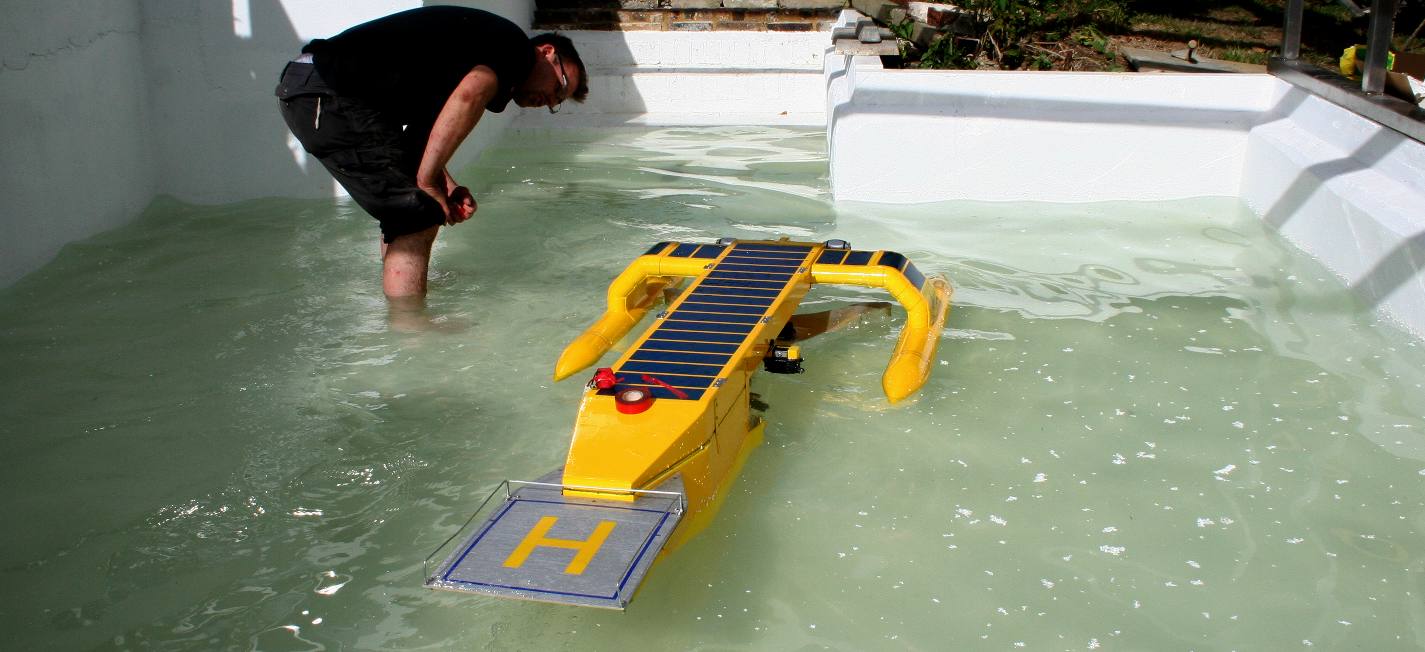
TESTING
- Chris Close (Project Director) is seen here watching the
SeaVax proof of concept boat filter plastic particles from
water in our
test tank facilities, in this case small polystyrene pieces
were scattered on the surface and recovered using twin
hydrocyclonic chambers to trap the plastic, while clean water
was returned to the tank.
PRESS
RELEASE - AUTUMN 2026
AI Could Turn a Shelved British Ocean‑Cleaning Robot into a Global Plastic‑Harvesting Workhorse
For years, the SeaVax project sat as a symbol of what might have been: a solar‑powered robotic vessel designed to filter plastic from the ocean, capable of separating micro‑ and macro‑plastics while avoiding marine life using optical recognition systems. It was an idea ahead of its time — and, crucially, ahead of its funding. By 2020 the volunteer engineering team had disbanded under mounting mortgage arrears, and the Cleaner Ocean Foundation reluctantly shelved development after repeated EU funding refusals .
But a decade later, something fundamental has changed. Not in the oceans — which continue to choke on plastic — but in the technology landscape. Artificial intelligence, once a speculative footnote in the SeaVax documentation (“we need satellites and computer analytics to speed up our learning curve” ), has matured into a powerful, commercially proven tool capable of transforming the economics of ocean cleanup.
And that shift may finally make SeaVax — or a modern successor — viable.
A robot cleaner that was too early for its own good
SeaVax was conceived as a fully autonomous, solar‑powered ocean filtration machine. Its 13‑metre collector head funnels plastic into a multi‑stage filtration system, including hydrocyclones for microplastic separation . The vessel can store up to 150 cubic metres of treated plastic — roughly 50 tonnes between offloading cycles .
The concept was bold, elegant and — in hindsight — missing one critical ingredient: a way to reliably find plastic.
The team knew this. They wrote openly that locating plastic was
“much the same as going
fishing… you need to know where to let go the nets” . They recognised that satellites could help, but in 2015–2020 the AI tools needed to interpret satellite data simply didn’t exist at practical scale.
Today they do.
AI changes everything — including the economics
Modern AI can detect floating debris in multispectral satellite imagery with high accuracy. It can forecast plastic drift using ocean current models, wind fields and storm data. It can coordinate fleets of autonomous vessels, optimising routes, energy use and offloading schedules.
Applied to SeaVax, that means one thing: efficiency.
The original SeaVax model assumed a 10‑day cycle to locate, harvest and offload plastic. With AI‑guided routing, that cycle drops to around six days — a 67% increase in plastic recovered per vessel per year. That uplift is not speculative; it is consistent with gains seen in other AI‑optimised maritime operations.
For a proposed fleet of 300 vessels — the scale SeaVax’s designers believed necessary to tackle the world’s major gyres — the difference is staggering:
Non‑AI fleet: ~540,000 tonnes/year
AI‑optimised fleet: ~900,000 tonnes/year
An additional 360,000 tonnes of plastic removed annually — equivalent to more than 3% of global ocean plastic input.
This is the kind of number that changes investor sentiment.
The missing commercial hook: Verified Ocean Recovered Plastic
One of the most overlooked aspects of the SeaVax proposal is that ocean‑recovered plastic is not worthless waste — it is a premium commodity.
Brands already pay significantly more for Verified Ocean Recovered Plastic, using it in packaging, textiles and consumer goods to meet sustainability commitments. The SeaVax documentation itself argued that “laws are needed to give a sufficiently high monetary value to genuinely harvested ocean plastic” and that such value could make the system commercially viable rather than philanthropic .
Today, that value exists.
A robotic fleet capable of producing authenticated, traceable ocean‑recovered plastic — with satellite‑verified harvesting locations and AI‑logged collection data — would be uniquely positioned in a growing market. Investors who once balked at the philanthropic framing of SeaVax may now see a blue‑economy asset class with measurable returns.
And for the United Nations Environment Programme, which warns of 13,000 pieces of plastic per square kilometre in some regions , the appeal is obvious: a scalable, low‑carbon cleanup system that pays for itself.
A solution that was politically impossible — until AI made it economically irresistible
The SeaVax team’s biggest barrier was not engineering but politics.
“Without the political will… all the solutions in the world will never see the light of day,” they wrote in 2017 . Funding applications were rejected, governments hesitated, and the project stalled.
AI changes that calculus.
A system that is:
- 50–70% more efficient
- cheaper to operate
- capable of producing premium recycled material
- aligned with UN SDG14
and scalable to global deployment
…is no longer a philanthropic moonshot. It is an environmental infrastructure project with commercial legs.
The tragedy is that SeaVax was simply too early. The opportunity now is that its core design — modular, solar‑powered, autonomous, and already partially prototyped — remains one of the most detailed ocean‑cleanup concepts ever developed.
With AI, it becomes something new: a viable, profitable, globally coordinated ocean‑harvesting fleet.
The question now is not whether SeaVax could work — but who will pick up the baton
The original team is gone. The prototype sits in a
museum in Sussex, a reminder of what innovation looks like when political will fails to meet environmental urgency.
But the oceans have not stopped accumulating plastic. The technology has caught up. The economics have shifted. And the world is finally
preparing for solutions that are both ambitious and practical.
The original SeaVax was designed for a future that didn’t exist yet.
Now we are almost there.
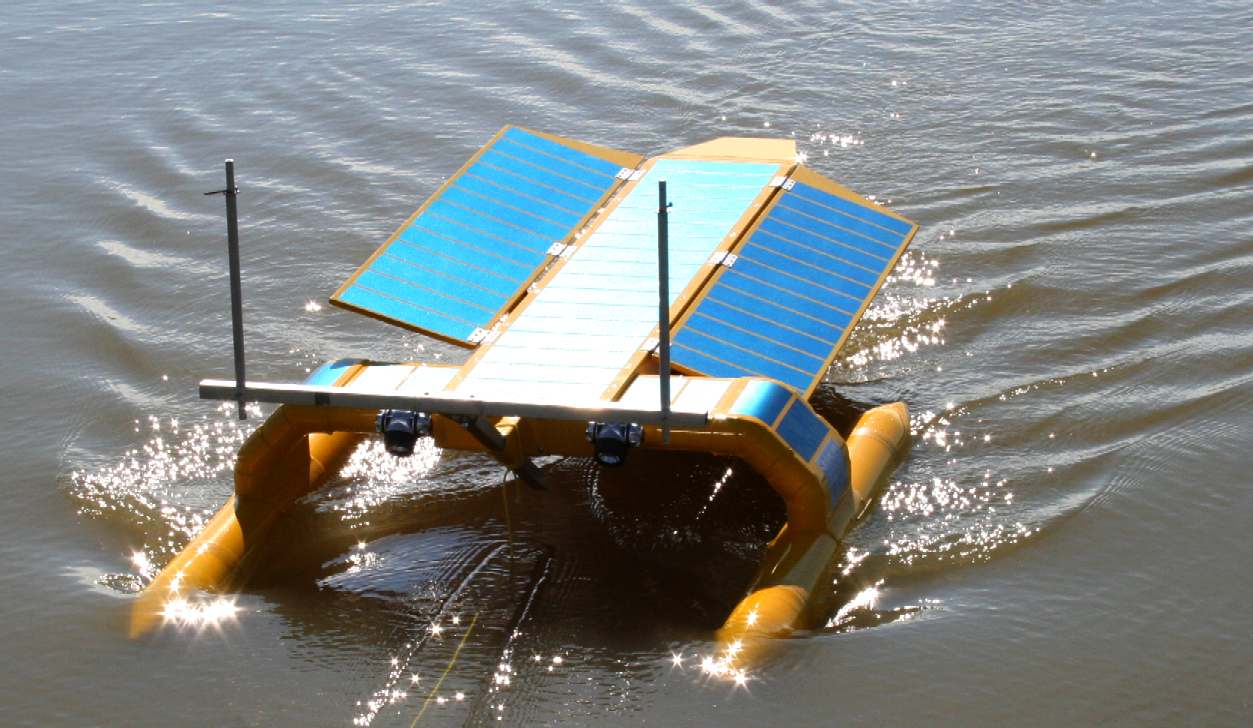
OPEN
WATER -
SeaVax is seen here during open water floatation
trials. Please note that this is a small (proof of concept)
version of any ocean or river floating dustcart that we hope
will be tested on the south coast of England as the project
progresses. SeaVax is a selective filtration machine that can
be configured to target solid plastics and particles. The
machine could also be used in oil spill emergencies, or as a
selective fishing vessel. The platform could thus be useful in
many ways.

OCEAN
CLEANING RIG - The SeaVax ocean plastic cleaning vessel is
seen here on an AmphiMax beach launcher in 1/20th scale for
testing in our water basin. Copyright ©
photograph 25 June 2018 Cleaner Ocean Foundation. All rights
reserved.
LINKS
& REFERENCE
https://www.
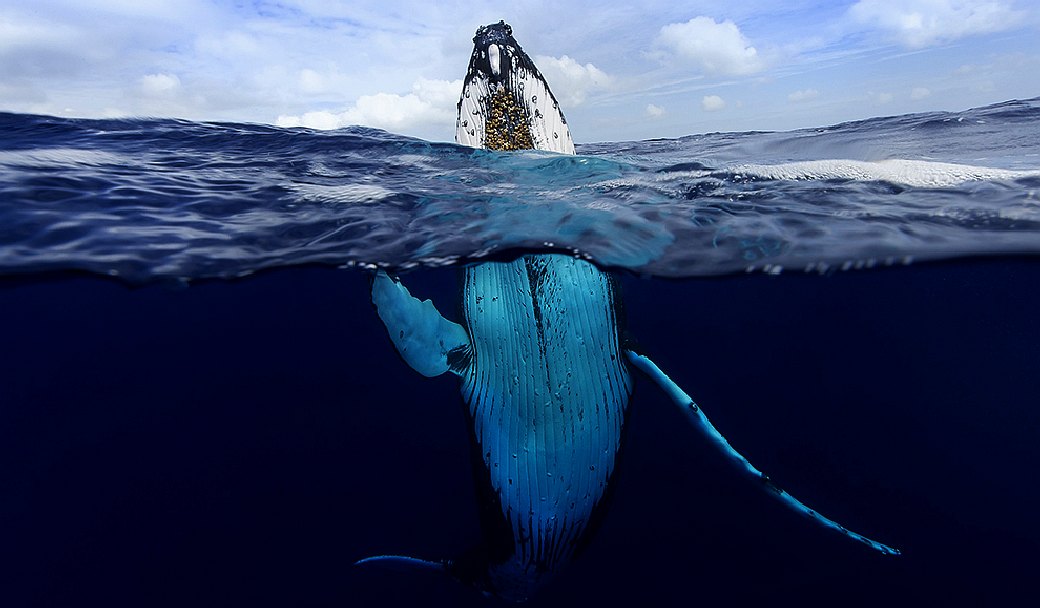
MARINE
LIFE - This humpback whale is one example of a magnificent
animal that is at the mercy of human
activity. Humans are for the most part unaware of the harm their fast-lane
lifestyles are causing. We aim to change that by doing all we
can to promote ocean literacy.
|