|
S E A V A X ™ 2.0 AI
Please use our A-Z to navigate this site or return HOME
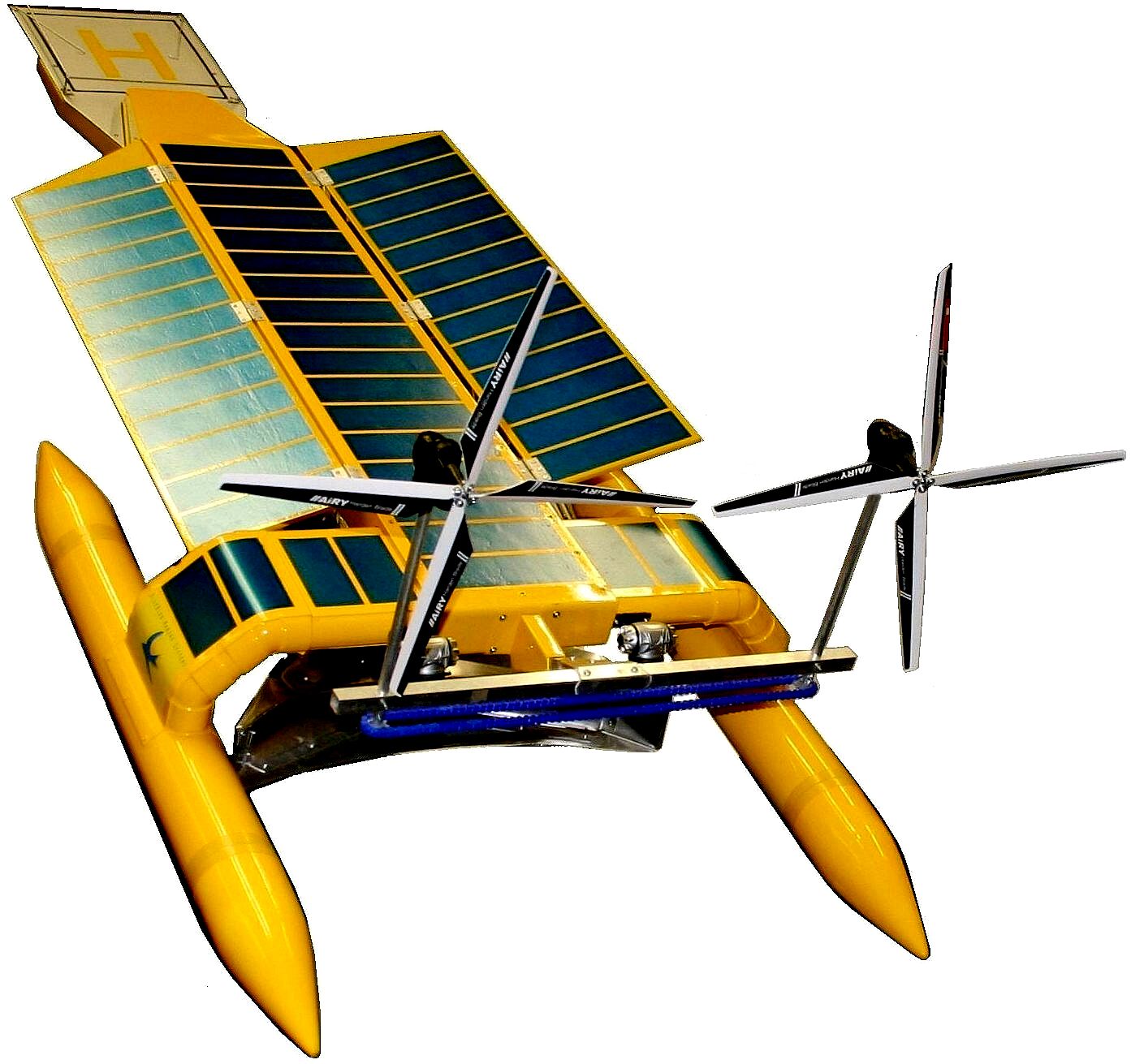
OCEAN CONDITIONER - This original SeaVax vessel was designed to operate in fleets to target ocean waste before it settles on the ocean floor where nobody can recover it. There is nothing like it in existence today, though other ideas for trapping plastic waste are being developed, such as that of Boyan Slat and the Seabin. SeaVax was to be made more cost effective in operational terms with AmphiMax versatility that slashes the cost of production and servicing by using a amphibious portable dock for assembly, launch and servicing. SeaVax would have been the only ocean going machine capable of harvesting ghost fishing nets. Eleven years on from 2015, in 2026 there is still nothing that can do that.
At some point in the future, the world will need less polluted oceans, for the health of our population and the seafood we depend on. "Blue Growth" was a European theme, to spur sustainable ocean related business, which trade is in steady decline. Also partly due to global warming.
A high-yield recovery system like SeaVax directly addresses the core operational gap in the United Nations' environmental mandate. Through the UN Environment Programme (UNEP) and the ongoing negotiations for the UN Global Plastics Treaty, the UN has set ambitious targets to end plastic pollution. However, treaty negotiations face a major divide between upstream measures (capping plastic production) and downstream measures (remediation and waste management).
RIVERVAX PILOT - This prototype vessel could have leapt ahead of other designs to become a reality in 2022 with appropriate levels of support for the development consortium from the European Commission. Forward Sea and RiverVax models will not feature wind turbines. Following a study concluded in 2022, by a Belgian masters degree student. Thank you L : )
THE UNITED NATIONS UNEP - Could SeaVax be a part solution for UN goals?
CAPEX AND OPEX - What level of G20 investment is required?
HEALTHIER OCEANS & BLUE GROWTH - What are the health benefits?
INVESTABILITY - Can SeaVax 2.0 AI be a commercial success?
WHERE DOES AI COME IN? - Will artificial intelligence make a difference?
WHAT IS THE MARKET VALUE OF OCEAN PLASTIC? - Is it worth fishing for marine plastic?
CERTIFICATION - How will the ocean plastic be verified for credits?
WORLD BANK, IMF & UNEP - Are there any match funding opportunities?
CIRCULAR (PLASTIC) ECONOMY - FISHING GROUNDS
PATENT APPLICATION - GB2622325.5 23rd September 2026
PATENT ABSTRACT - DESCRIPTION - CLAIMS
There are 5 swirling ocean garbage patches called gyres:
The ocean is a vast expanse of salt water: a shared asset.
WHY 300 VESSELS IS NOT ENOUGH
Assuming 10 million tons per year, and 300 SeaVax vessels, each harvesting say, 20 tons a day, 365 days a year, will the 300 strong fleet be sufficient to cope with the annual influx of plastic?
To capture the full 8 million tons of plastic entering the ocean annually at a rate of 30 tons per vessel per day, you would need 731 SeaVax vessels.
TESTING - Chris Close (Project Director) is seen here watching the SeaVax proof of concept boat filter plastic particles from water in our test tank facilities, in this case small polystyrene pieces were scattered on the surface and recovered using twin hydrocyclonic chambers to trap the plastic, while clean water was returned to the tank.
PRESS RELEASE - AUTUMN 2026
AI Could Turn a Shelved British Ocean‑Cleaning Robot into a Global Plastic‑Harvesting Workhorse
For years, the SeaVax project sat as a symbol of what might have been: a solar‑powered robotic vessel designed to filter plastic from the ocean, capable of separating micro‑ and macro‑plastics while avoiding marine life using optical recognition systems. It was an idea ahead of its time — and, crucially, ahead of its funding. By 2020 the volunteer engineering team had disbanded under mounting mortgage arrears, and the Cleaner Ocean Foundation reluctantly shelved development after repeated EU funding refusals .
One of the most overlooked aspects of the SeaVax proposal is that ocean‑recovered plastic is not worthless waste — it is a premium commodity.
The SeaVax team’s biggest barrier was not engineering but politics.
“Without the political will… all the solutions in the world will never see the light of day,” they wrote in 2017 . Funding applications were rejected, governments hesitated, and the project stalled.
The original team is gone. The prototype sits in a
museum in Sussex, a reminder of what innovation looks like when political will fails to meet environmental urgency.
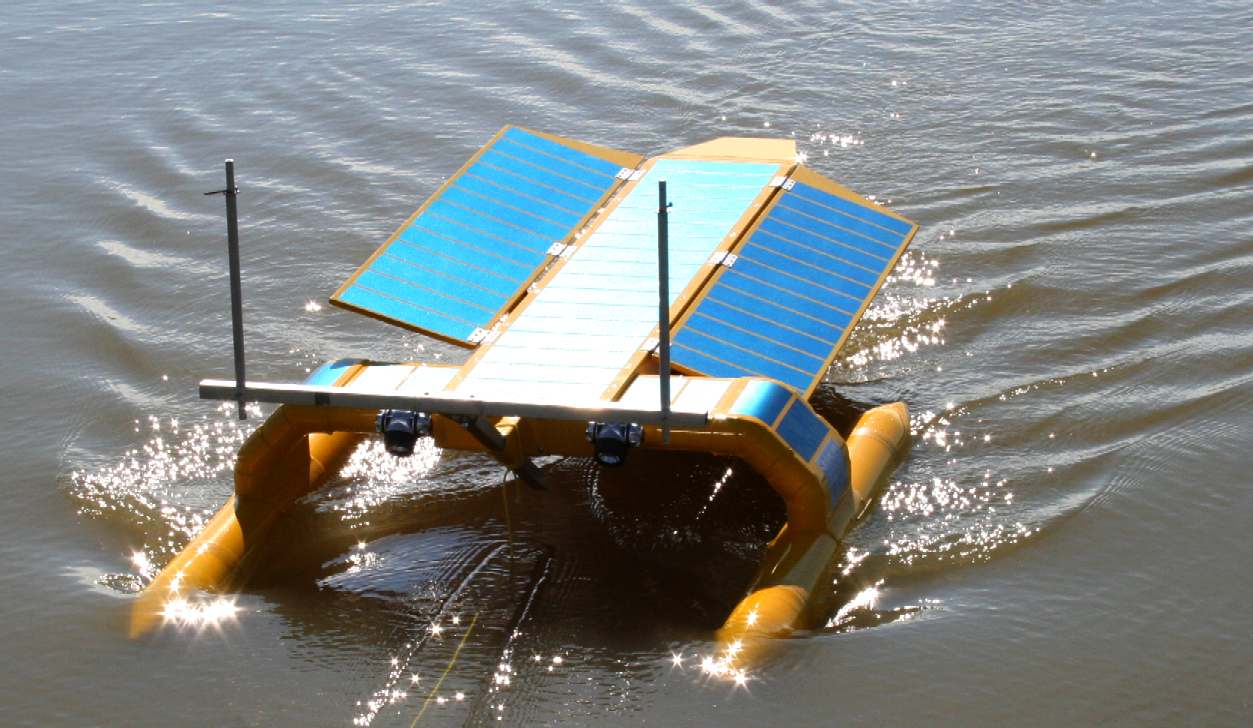
OPEN WATER - SeaVax is seen here during open water floatation trials. Please note that this is a small (proof of concept) version of any ocean or river floating dustcart that we hope will be tested on the south coast of England as the project progresses. SeaVax is a selective filtration machine that can be configured to target solid plastics and particles. The machine could also be used in oil spill emergencies, or as a selective fishing vessel. The platform could thus be useful in many ways.
OCEAN CLEANING RIG - The SeaVax ocean plastic cleaning vessel is seen here on an AmphiMax beach launcher in 1/20th scale for testing in our water basin. Copyright © photograph 25 June 2018 Cleaner Ocean Foundation. All rights reserved.
LINKS & REFERENCE
https://www.
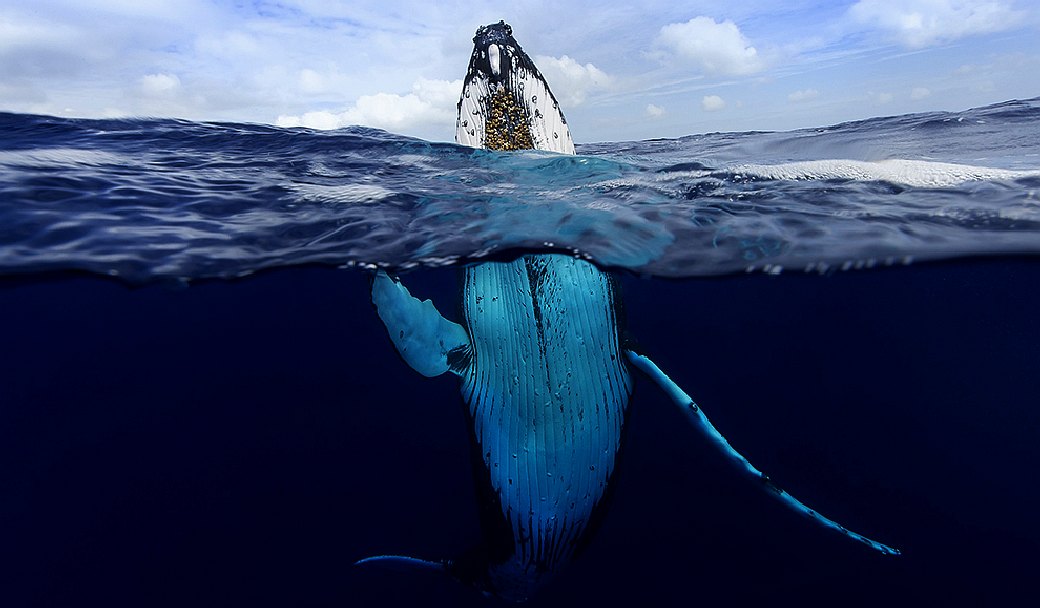
MARINE LIFE - This humpback whale is one example of a magnificent animal that is at the mercy of human activity. Humans are for the most part unaware of the harm their fast-lane lifestyles are causing. We aim to change that by doing all we can to promote ocean literacy.
|